
Sticker Sheets vs. Die-Cut Stickers vs. Roll Labels: Which Format Do You Need?
AzePrint Print Journal
Sticker Sheets vs. Die-Cut Stickers vs. Roll Labels: Which Format Do You Need?
By AzePrint Team, last updated 19 August 2026
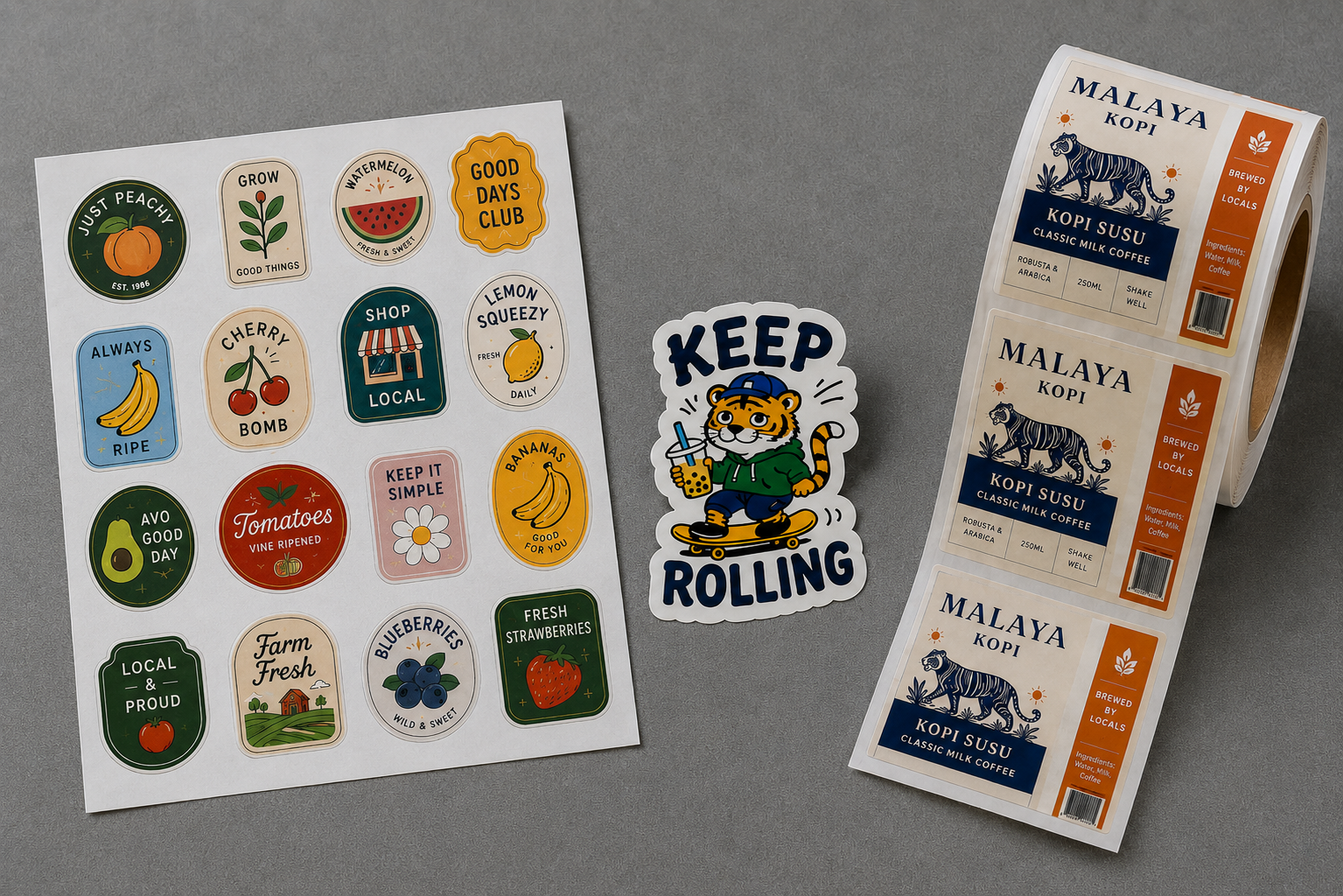
The right sticker format comes down to how you're applying it. Choose sheets if you're handing stickers out as swag or selling an assortment. Choose die-cut singles if you want a shaped, individual sticker for giveaways, packaging inserts, or one-off branding. Choose roll labels if you're applying the same design to a product or package hundreds or thousands of times and speed matters.
Here's the difference in practice, along with the material and finish choices that affect durability and cost, and where digital printing changes what's actually possible at a small quantity.
Sheets vs. Die-Cut vs. Roll: How They Differ
| Format | What It Is | Best For | Typical Min. Order |
|---|---|---|---|
| Sticker sheet | Multiple designs, or copies of one, on a single backing page, peeled individually | Swag, assortments, planner or journal stickers, retail sale | Lowest, often 1 sheet |
| Die-cut single | One sticker cut to the exact outline of your design | Giveaways, laptop or water-bottle stickers, packaging inserts, limited runs | Low, commonly 25 units |
| Roll label | One design repeated continuously on a roll, wound for fast peel-and-apply | Product labeling, packaging seals, shipping labels, anything applied at volume or by machine | Higher, commonly 50 units |
Minimums shown are general industry benchmarks, not confirmed AzePrint figures. Check the live calculator on each product page for our actual minimums and pricing.
Material: What Actually Affects Durability
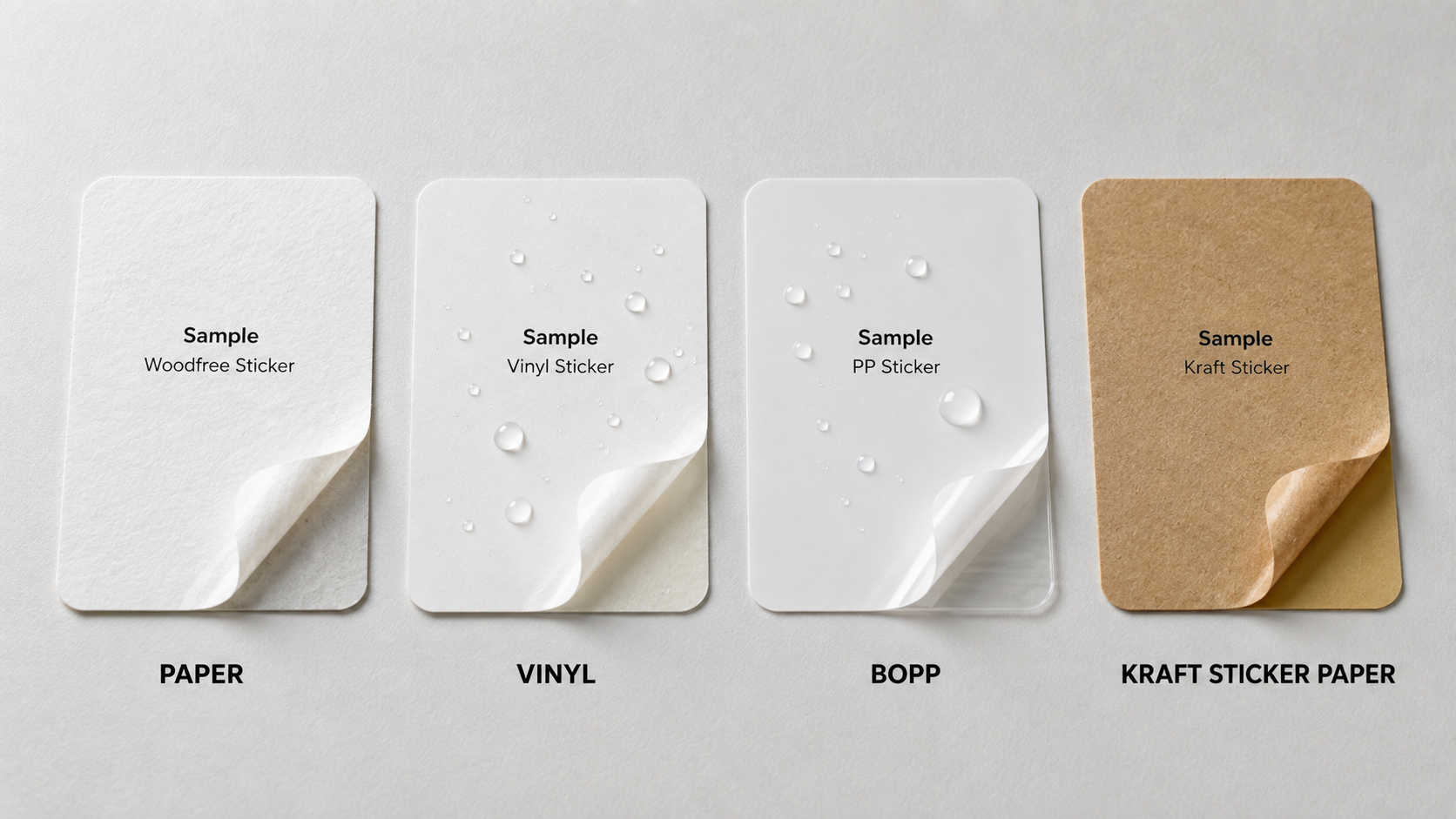
- Paper, uncoated or coated. Lowest cost, fine for indoor use, gift packaging, or short-term promotions. Not water-resistant.
- Vinyl. Waterproof and far more durable than paper. The standard choice for anything that might get wet, handled roughly, or used outdoors, such as water bottles, coolers, or car decals.
- PP (polypropylene). The common material for roll labels, chosen for its durability and resistance to moisture and handling, so it survives shipping and shelf life without fading or tearing.
- Kraft. A natural, uncoated look popular for artisanal or eco-positioned food and beverage brands, trading some durability for aesthetic.
If a label is going on something that will be refrigerated, handled with wet hands, or shipped internationally, vinyl or PP is worth the small cost increase over paper. A paper label that peels or smears in transit undermines the product it's on more than the label cost ever saves.
Finish Options: Where a Sticker Can Stand Out
Beyond the base material, finishing changes how a sticker or label reads at a glance:
- Matte or gloss laminate. The default choice. Gloss makes colors pop, matte reads more premium and understated.
- Spot UV. A glossy raised detail over a matte base, used to make a logo or specific element stand out without changing the whole sticker's finish.
- Foil stamping. A metallic accent, gold, silver, or copper, for a premium or limited-edition look.
Foil and spot UV finishing traditionally required expensive plates and higher minimum orders to justify the setup cost. On a digital press with no plates involved, that finishing is available at the same low minimums as a standard sticker. It's worth confirming with any supplier, since it's a real cost difference between digital and traditional, plate-based, printing methods, and one of the reasons small brands come to us instead of a plate-based shop for short runs.
Questions, Answered
What's the difference between a die-cut sticker and a roll label?
A die-cut sticker is an individual piece cut to your design's exact outline, delivered as a single item, ideal for giveaways or one-off branding. A roll label is the same design repeated continuously on a roll, built for fast, repeated application to products or packaging, by hand or with an applicator machine.
Are stickers waterproof?
Only if the material is. Standard paper stickers are not water-resistant. Vinyl and PP stickers are waterproof and hold up to handling, moisture, and outdoor exposure. Specify the material if durability matters for your use case.
What's the minimum order for roll labels vs. die-cut stickers?
This varies by supplier. As a general benchmark, die-cut stickers and sticker sheets commonly start around 25 units, while roll labels commonly start around 50 units, since the roll format needs a minimum length to be produced efficiently. Check our live calculator for the exact minimum on each product.
Can I use stickers as product labels?
Yes, with the right material. Vinyl or PP roll labels are the standard for product labeling because they resist moisture, handling, and fading. Paper stickers suit packaging inserts, swag, or short-term use better than a label meant to stay
on a product long-term.
Is food-safe label material different from a regular sticker?
Yes. Food-contact or food-adjacent labeling typically needs food-grade adhesive and material certified safe for the intended contact, since direct food contact and exterior packaging have different requirements. If a label will touch food
directly, confirm food-safe certification with your supplier rather than assuming a standard label material qualifies.
Explore Die-Cut Stickers, Roll Labels, and Spot UV Stickers, or see how digital printing keeps short runs affordable.
Foil and Spot UV, at the Same Low Minimum as a Standard Sticker
Digital printing means premium finishing doesn't require a premium order size. Pick your format, material and finish, and see your price instantly.
Get Your Quote →